

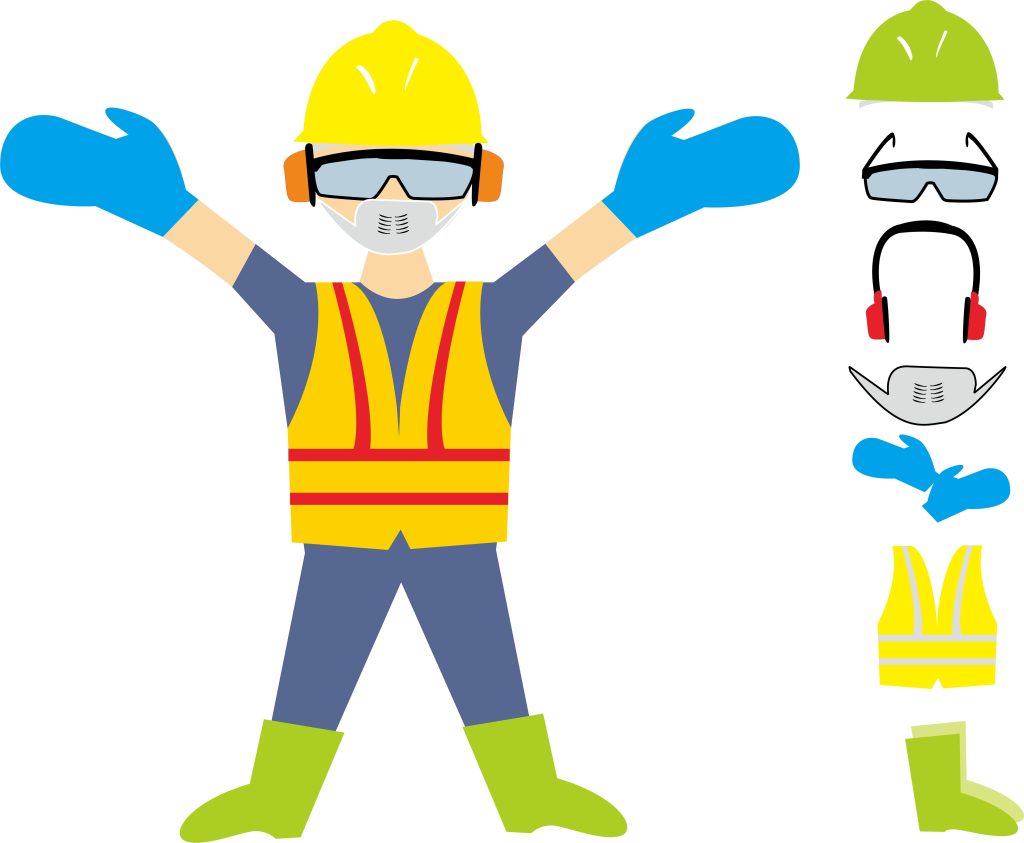
The 5 point PPE recommendation for UK construction sites covers five essential items that help protect workers from common site hazards. However, the right PPE depends on the work you carry out and the risks you identify on site. Here’s exactly what they are, when you need them, and how to choose the right gear for the job.
✔ Suitable for UK construction site use
✔ Selected for durability on real site conditions
✔ Trusted by trades who need gear that lasts
✔ Fast UK delivery
To make sure you’re properly equipped, these are the five essential items that make up 5 point PPE for most construction work:
Protects against falling objects, debris, and head injuries.
Helps plant operators and other personnel see workers clearly.
Protects feet from crushing, punctures, and slips.
Reduce the risk of cuts, abrasions, and handling injuries with suitable gloves.
Protect your eyes from dust, debris, and flying particles.
Furthermore, consider anti-fog and scratch-resistant options.
The 5 point PPE set forms a baseline only.
However, you may need additional PPE depending on the task, including:
Always carry out a risk assessment to determine the correct PPE for each job.
On site, the right PPE isn’t about ticking boxes — it’s about avoiding problems.
The wrong gloves slow you down. Poor eye protection steams up. Cheap gear doesn’t last.
For this reason, it’s worth choosing PPE that’s built for real construction work — not just the cheapest option on the shelf.
Minimum construction PPE requirements UK typically include a hard hat, high-visibility clothing, safety boots, protective work gloves for construction, and eye protection.
However, these items provide a baseline for most construction environments, although you may need additional PPE depending on the task.
Yes. Under UK health and safety law, employers must provide suitable personal protective equipment where you cannot control risks by other means. Workers are also responsible for using PPE correctly and reporting any defects.
Employers are responsible for supplying PPE free of charge to employees where it is required for safety. Self-employed workers are responsible for providing their own PPE.
In most cases, yes. Standard PPE such as hard hats, hi-vis clothing, and safety boots are required on the majority of construction sites. However, exact requirements can vary depending on site rules and risk assessments.
Additional PPE may include hearing protection, respiratory protection (dust masks or respirators), face shields, or specialist gloves depending on the task. For example, cutting or grinding materials will often require both eye protection and suitable equipment for cutting concrete or masonry safely.
Failure to wear required PPE can result in removal from site, disciplinary action, or increased risk of injury. PPE is a key part of site safety and compliance.
The right PPE depends on the specific hazards involved. Consider the materials you’re working with, the tools being used, and the environment. For example, using the right eye protection for cutting and grinding and well-fitted gloves can make a significant difference in both safety and performance.