

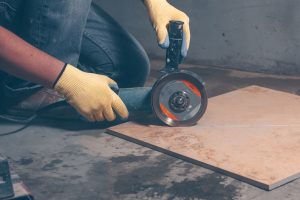
Cutting porcelain and ceramic tiles requires the right blade, the right equipment and a little care. Porcelain is particularly dense and can be difficult to cut cleanly, while ceramic tiles can chip if the wrong blade or cutting technique is used.
Whether you are cutting tiles for installation, working with an angle grinder or using a tile saw, choosing a diamond blade designed for the material can make a big difference to cutting performance and the finished edge.
This guide explains how to choose a blade for porcelain and ceramic tiles, the difference between wet and dry cutting, how to reduce chipping and some of the common problems that can affect tile cutting.
If you’re unsure whether an angle grinder or tile saw is the better option, see our Angle Grinder vs Tile Saw guide.
You can also browse our full range of tile and porcelain cutting blades.
Not all tiles cut in the same way.
The hardness, density and composition of the material can affect cutting speed, edge quality and how much pressure the blade needs.
Porcelain is a dense and hard tile material, so it needs a diamond blade designed for porcelain cutting.
Using a blade that is not suitable for the material can lead to:
For hard porcelain, a suitable specialist tile blade can provide cleaner and more controlled cutting.
Our porcelain tile cutting blade is designed for precision cutting of porcelain and other hard tile materials.
Ceramic tiles are generally less dense than porcelain, but they still need a suitable diamond blade if you want a clean and controlled cut.
A suitable ceramic tile blade can help with:
The blade should always be matched to the material and the equipment being used.
Artificial stone and engineered materials can vary considerably in hardness and composition.
Some can be dense and abrasive, so the blade needs to be suitable for the particular material and cutting application.
If you are unsure which blade is appropriate, tell us what material you are cutting and what machine you are using and we can help you narrow down the options.
The blade is one of the most important factors when cutting porcelain and ceramic tiles.
A diamond blade designed for tile cutting is manufactured differently from a general-purpose masonry blade.
For porcelain and ceramic cutting, look for a blade that is:
For harder porcelain, a specialist blade can help produce a cleaner and more controlled cut.
If you are not sure which blade you need, see our guide to How to Choose the Right Diamond Blade
Yes. An angle grinder fitted with a suitable diamond blade for porcelain can be used to cut porcelain tiles.
Angle grinders are particularly useful for smaller cuts, notches, shaping and jobs where a tile saw is not practical.
However, porcelain is hard and brittle, so cutting technique matters.
When cutting porcelain with an angle grinder:
Chipping is one of the most common problems when cutting porcelain.
The blade, cutting technique and condition of the tile can all affect the finished edge.
To reduce chipping:
A blade designed for porcelain is more appropriate than a general-purpose masonry blade.
The cutting edge needs to be suitable for the density and hardness of the tile.
Don’t force the grinder or tile saw through the material.
Excessive pressure can make the blade work harder and may increase the chance of damaging the tile.
Make sure the tile is properly supported before cutting.
Movement or vibration can affect the cut and make the tile more difficult to control.
The final part of a cut can be particularly important.
Avoid suddenly pushing the blade through the last section of material. Keep the cut controlled until the blade has completely passed through the tile.
For more information, see our guide to How to Cut Without Chipping.
Diamond blades are available with different cutting-edge designs, and the design affects how the blade cuts.
Turbo blades have a textured or serrated cutting edge.
They can offer a useful combination of cutting speed and cutting control, depending on the material and blade design.
Continuous-rim blades have a continuous cutting edge and are commonly used for applications where a cleaner, more controlled finish is important.
They are particularly associated with tile and porcelain cutting.
The important thing is not simply choosing a blade because it is called turbo or continuous rim. The blade still needs to be suitable for the material and the machine.
Tile cutting can be carried out using either dry or wet cutting equipment, depending on the blade, machine and application.
Dry cutting is commonly used with angle grinders because it is convenient and does not require a water supply.
Advantages include:
However, dry cutting can produce dust, particularly when cutting tile and other mineral-based materials.
Use suitable dust-control measures and PPE, and always follow the instructions supplied with the blade and machine.
Wet cutting is commonly used with tile saws.
Water helps cool the cutting area and suppress dust, making it useful for longer or more controlled cutting operations.
Wet cutting can be particularly useful when working with dense materials such as porcelain.
The best method depends on the job, the equipment available and the blade being used.
Even with the correct blade, cutting technique can affect the result.
Chipping can occur when the blade is unsuitable, the cutting technique is too aggressive or the tile is not properly supported.
A blade designed for porcelain can help reduce unnecessary chipping.
If the blade is cutting slowly, check that it is suitable for the material and that it is being used correctly.
A worn or unsuitable blade can affect cutting speed.
Excessive heat can affect both the blade and the cutting process.
Using the correct blade and cutting method is important, particularly when dry cutting dense materials.
Movement during cutting can result in an uneven cut.
Make sure the tile is properly supported and keep the machine steady throughout the cut.
If you are experiencing poor cutting performance, our guide to Why Is My Diamond Blade Not Cutting? may help identify the problem.
There isn’t one blade that is automatically the best for every porcelain tile and every machine.
The right choice depends on:
For precision porcelain cutting, choose a diamond blade specifically designed for porcelain and compatible with your machine.
You can see our porcelain and tile cutting blades here.
When the finished edge matters, using a blade designed for the material is worth considering.
Our range includes diamond blades for:
If you’re not sure which blade is suitable, tell us what you are cutting and which machine you are using.
Before buying a blade, it helps to know:
Give us those details and we can help you work out which type of blade makes sense for the job.
Call Chris on 07879 653725
A diamond blade specifically designed for porcelain is the appropriate starting point. The blade must also be compatible with the machine and suitable for the thickness and type of tile being cut.
Yes. An angle grinder fitted with a suitable porcelain diamond blade can be used for cutting porcelain tiles, particularly for smaller cuts, notches and shaping work.
Use a suitable porcelain diamond blade, support the tile properly and keep the cutting action controlled. Avoid forcing the blade through the material, particularly towards the end of the cut.
Choose a diamond blade designed for ceramic or tile cutting and make sure it is compatible with the machine you are using.
Wet cutting can help control heat and dust and is commonly used with tile saws. Dry cutting can be more convenient with an angle grinder. The appropriate method depends on the equipment, blade and job.
Chipping can be caused by an unsuitable blade, excessive cutting pressure, poor tile support or an unsuitable cutting technique. The condition of the blade can also affect the result.
A general-purpose concrete blade is not necessarily suitable for porcelain. Porcelain is dense and brittle, so a blade specifically designed for tile or porcelain cutting is a better choice.
Cutting porcelain and ceramic tiles doesn’t need to be a battle.
Use the right blade, use the right machine and let the blade do the work.
If you’re unsure what you need, tell us what you’re cutting and what equipment you’re using.
We’ll help you find a suitable option.
Browse our tile and porcelain cutting blades.
See our products in action on TikTok, YouTube and Instagram for more site-ready gear and updates.